
Static Ads & AI Direction
Type:
Paid Media + Performance
Duration:
2025 - Ongoing
Some of the specifics are under NDA, so a few details had to be abstracted.
The shape of the work, the thinking behind it, all of that is here.
Context
This case study covers two related parts of my work. The first is paid media static design, the kind of in-feed work that has to earn a click in about a second. The second is the AI direction I've built up over the last couple of years, which is now baked into how almost everything I make gets made.
These aren't separate jobs. The AI work is what makes the static work possible at the volume and speed it runs at, and the static work is where the AI experiments get pressure-tested against real performance.
How we think about statics
Most of the strategy on these campaigns isn't mine. I work alongside a creative strategist who runs the briefs, the angles, and the data-driven thinking that decides where each campaign goes. We sketch directions together, she locks the strategy, then I handle the design and creative production from there.
The shared approach we work from is simple. The visual stops the scroll. The headline creates curiosity. The layout guides attention toward one clear action. Three jobs, one creative.
The work that performs isn't the most polished. It's the work that feels native to the feed it's running in, with a hook that earns the second look. Strong opening visual, audience-aware messaging, platform-native composition. Anything that screams "this is an ad" loses.
Before we design anything, she's already broken down what's working in the brand's own data and in the competitor set. Hook structure, visual composition, where the message sits, where the CTA lands. The next concept builds on those patterns instead of starting from a blank page. By the time the brief reaches me, the thinking is sharp enough that the design can stay focused on execution.
Two people, very fast loop.
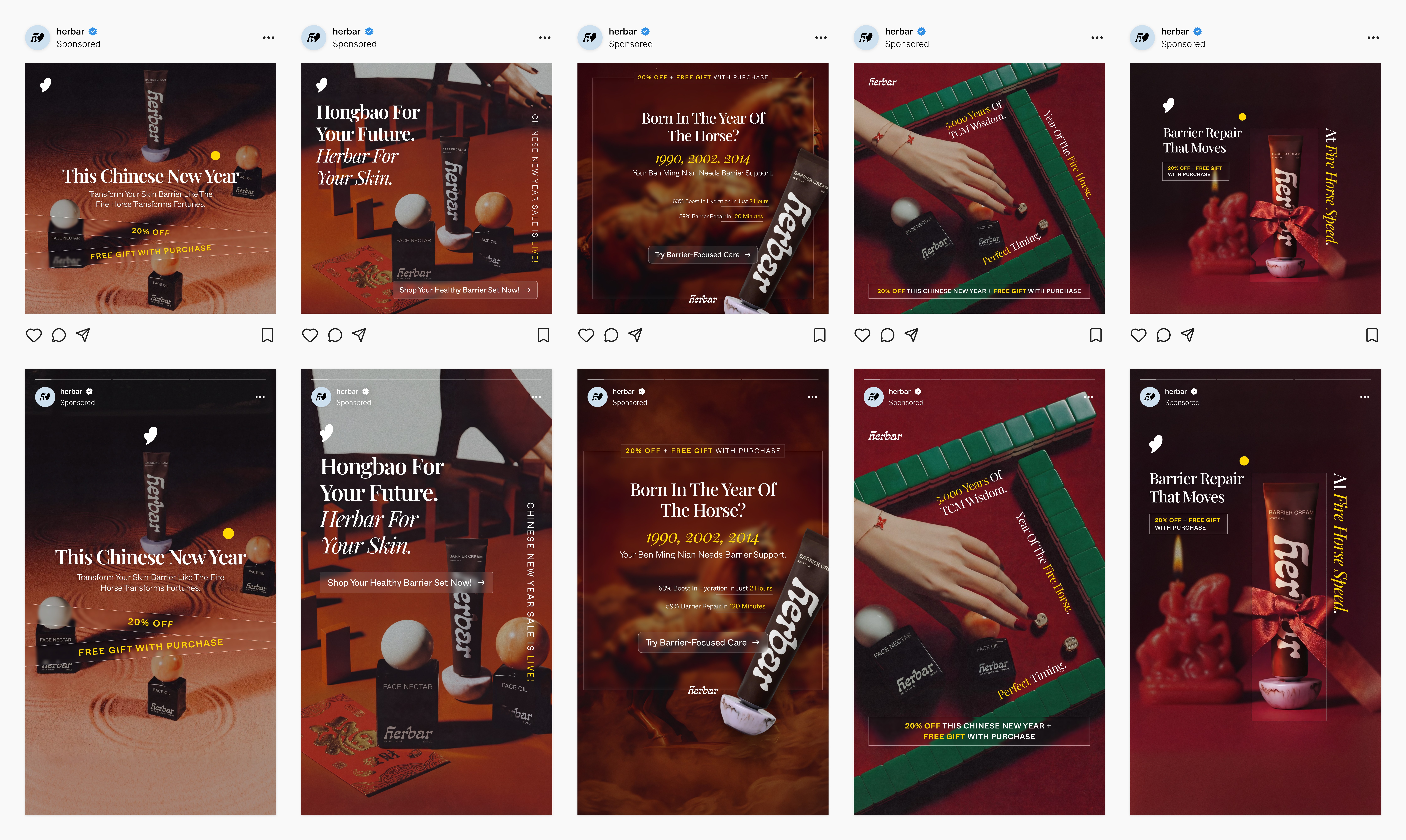
Herbar, and the Chinese New Year campaign
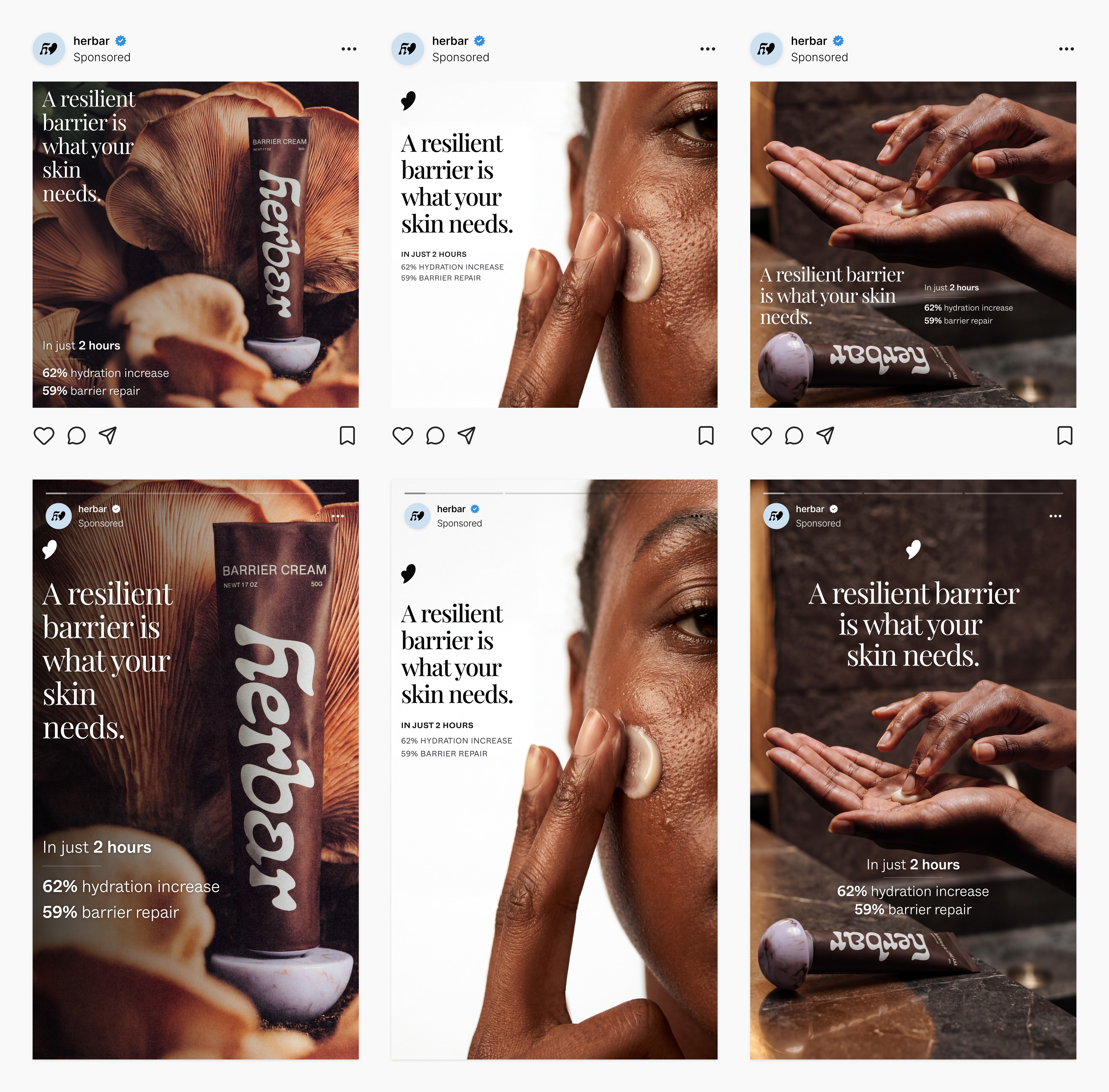
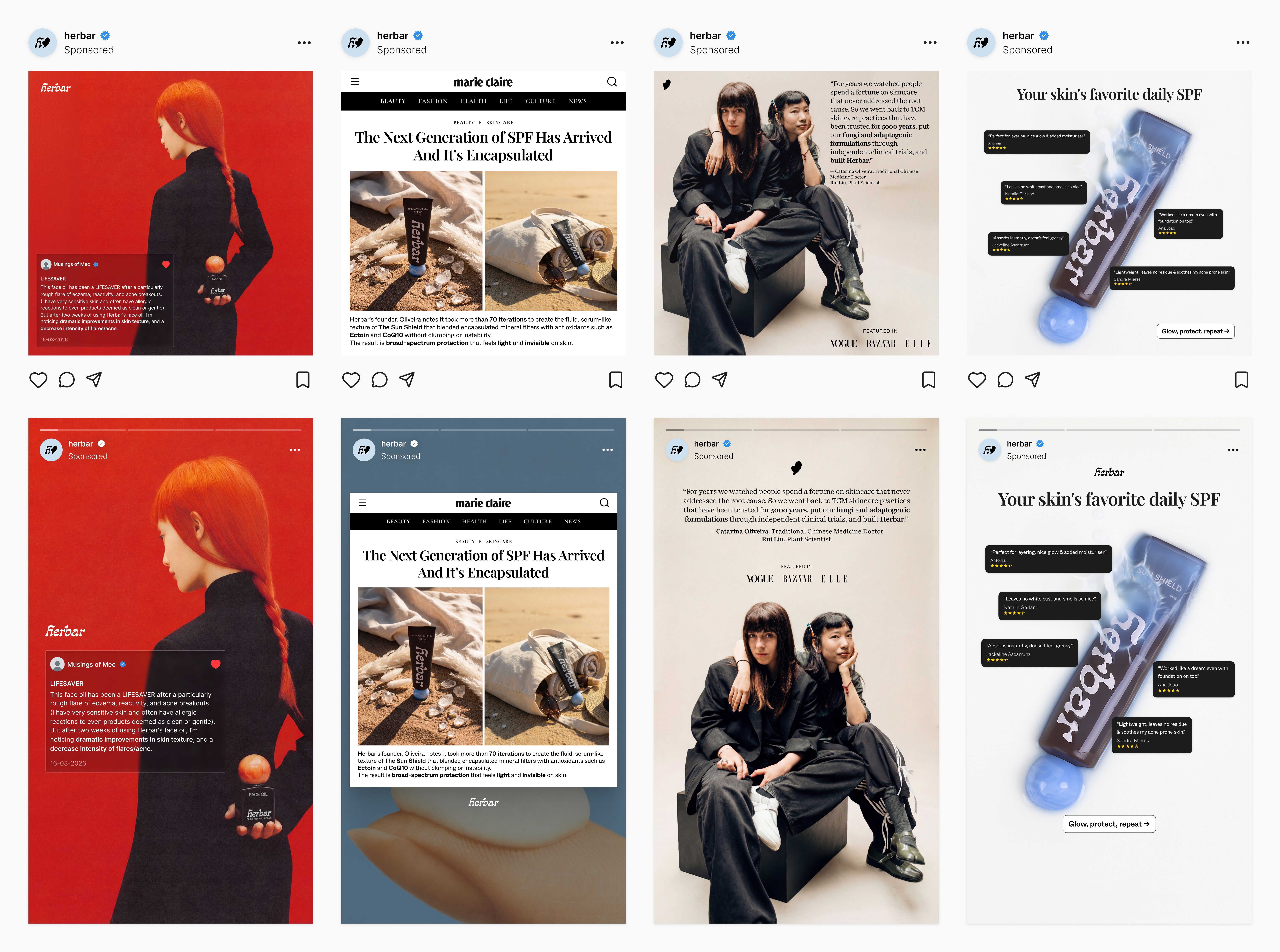
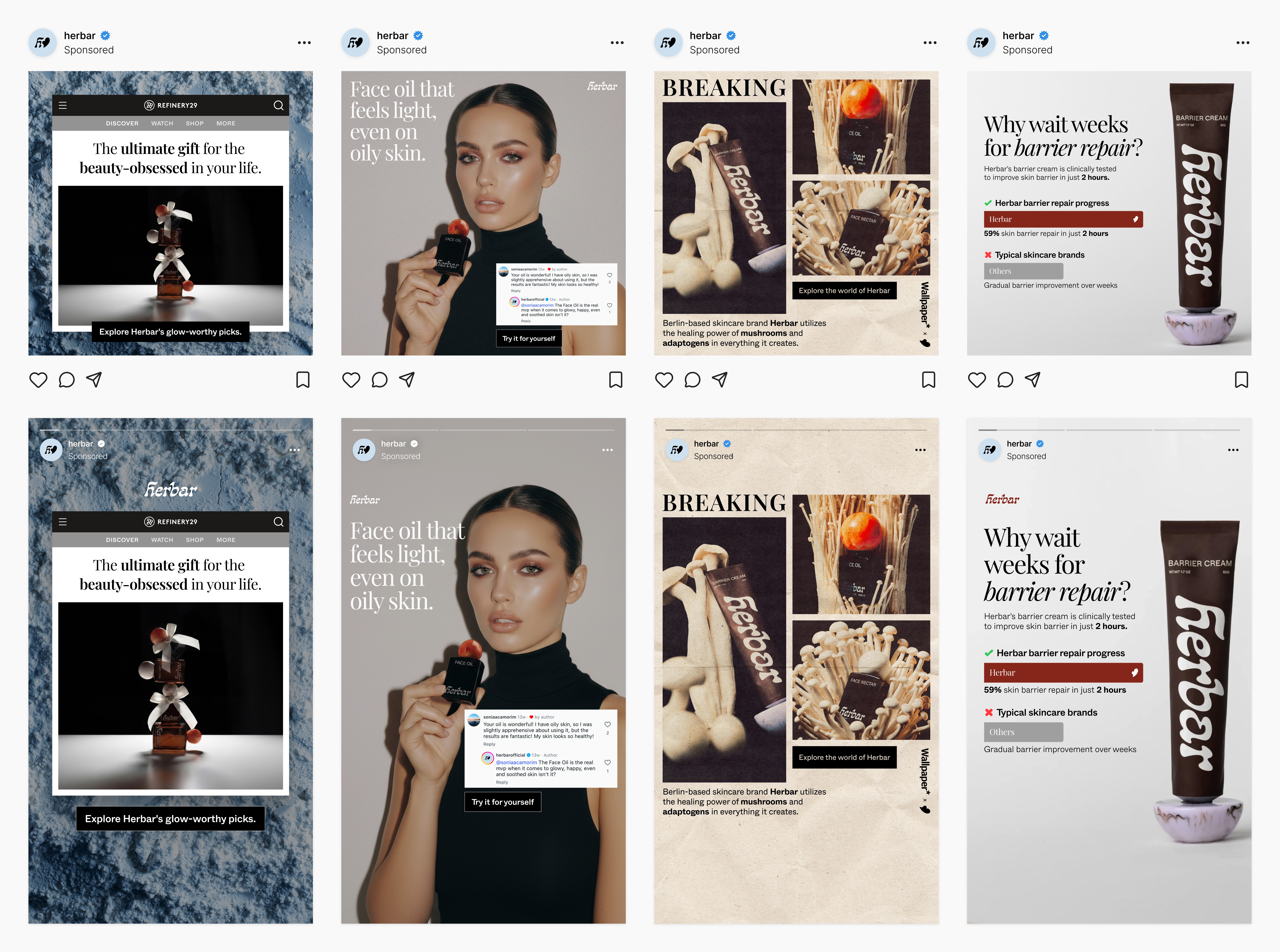
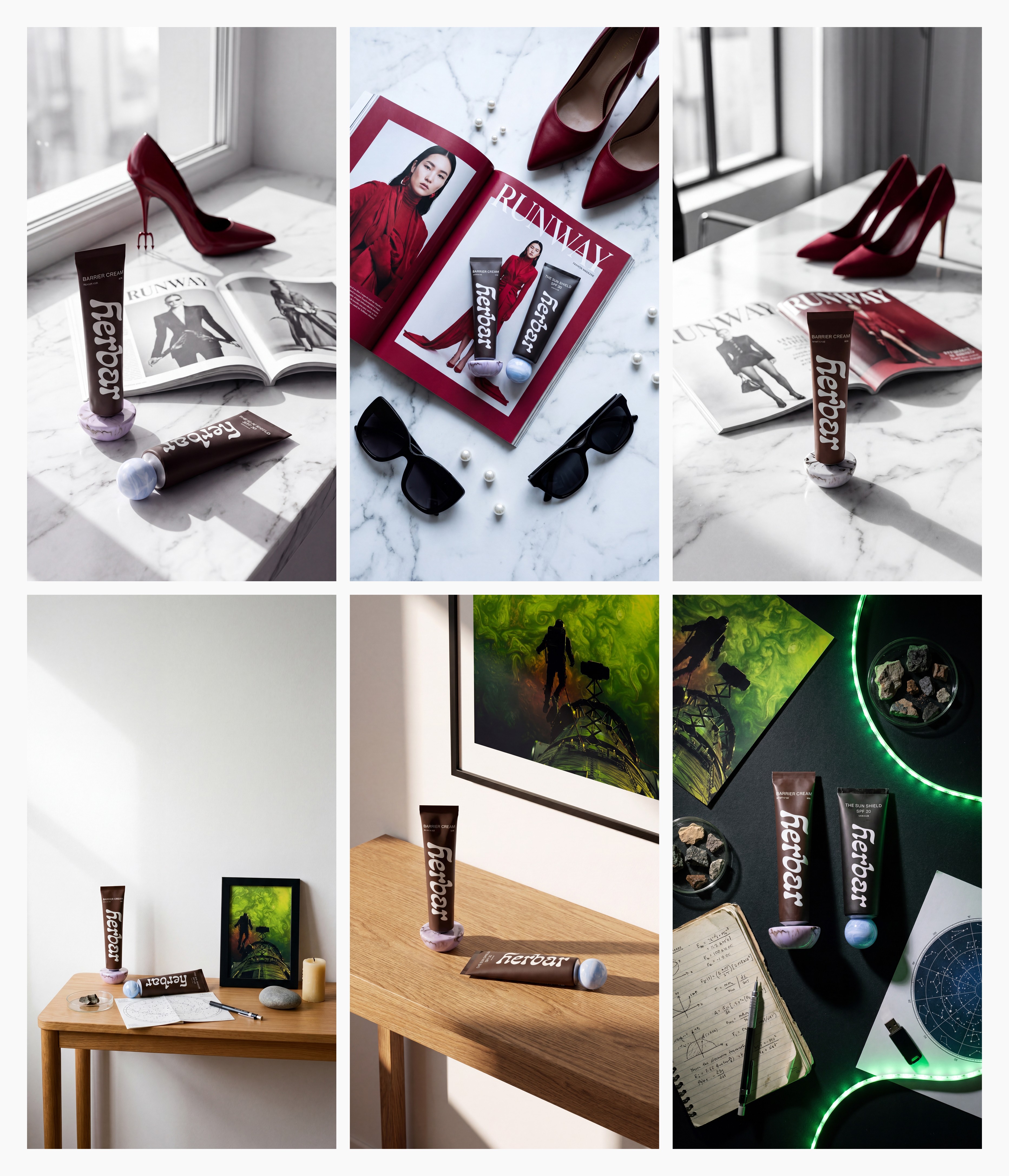
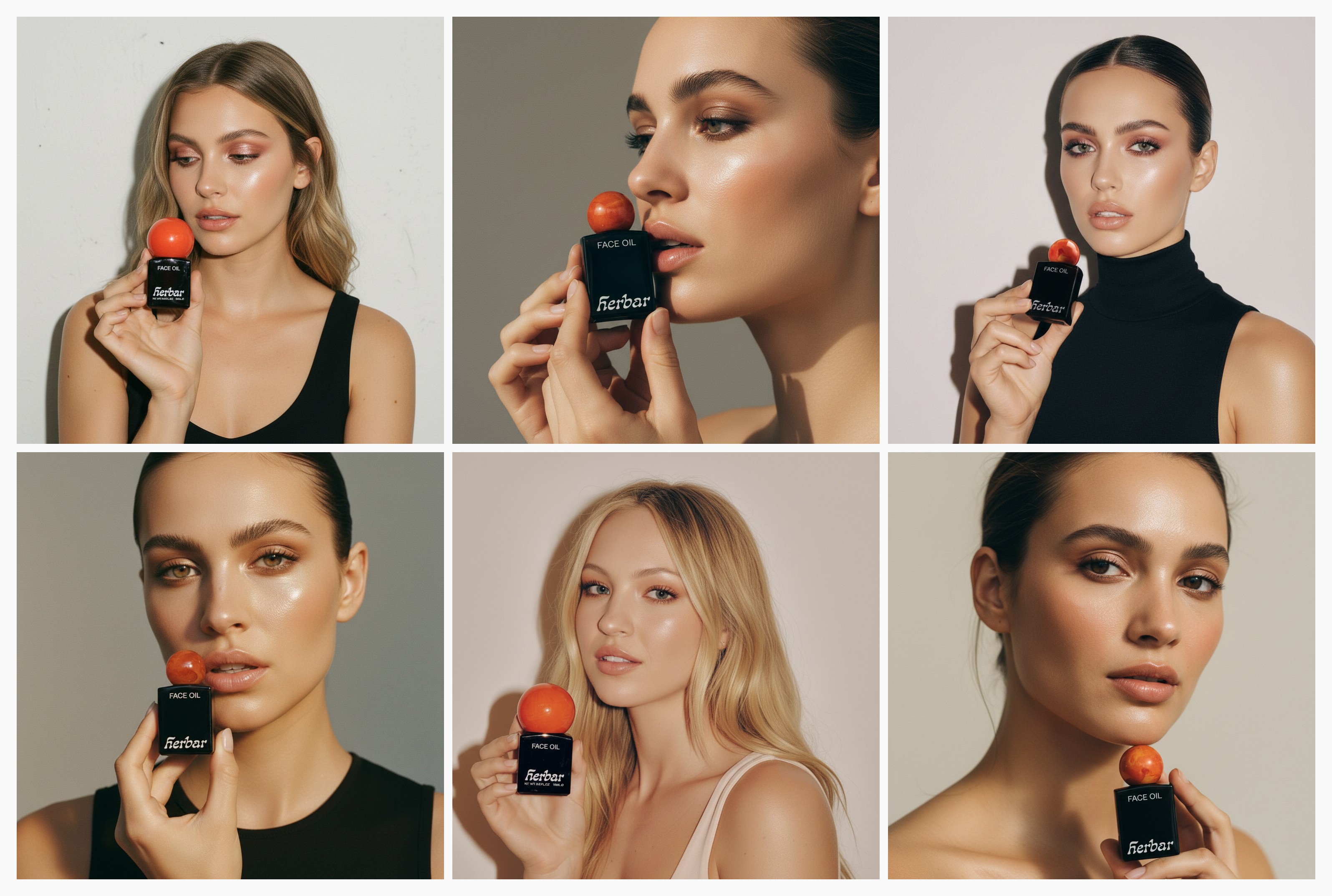
Herbar is a skincare brand built around traditional Chinese medicine. When they came on, their paid media was running at 0.5x to 1x ROAS, which is the polite way of saying it was losing money. The brand was strong, the product was strong, the ads weren't pulling their weight.
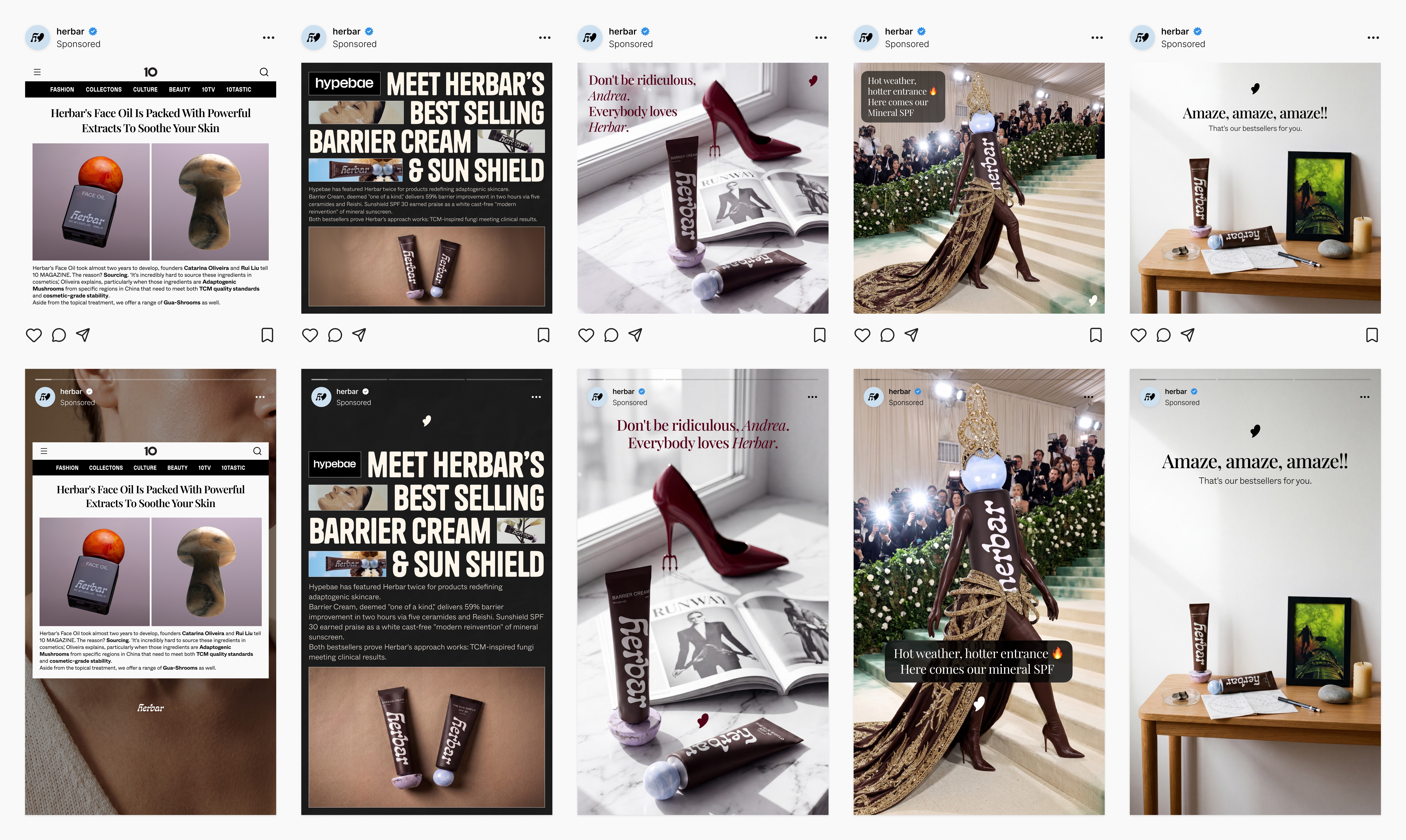
We rebuilt the creative direction from scratch. Hooks that spoke to the audience instead of at them. Visuals that respected the cultural roots of the brand instead of decorating around them. Compositions that felt native to the platforms they were running on.
After the rework, they were hitting 2x ROAS consistently, which for them was a complete turnaround.
The campaign I'm proudest of from that account is the Chinese New Year run. The brand has a real heritage story to tell, and CNY is the one moment in the calendar where leaning into that story isn't just appropriate, it's expected. We built creatives that wove the traditional roots of the brand into a contemporary visual language, treating the holiday with the weight it deserves rather than using it as decoration.
That run peaked at 9x ROAS. It's the highest number I've personally shipped, and it's the project that taught me how much a campaign earns when you take a brand's actual story seriously instead of just designing around it.
Across the rest of the work
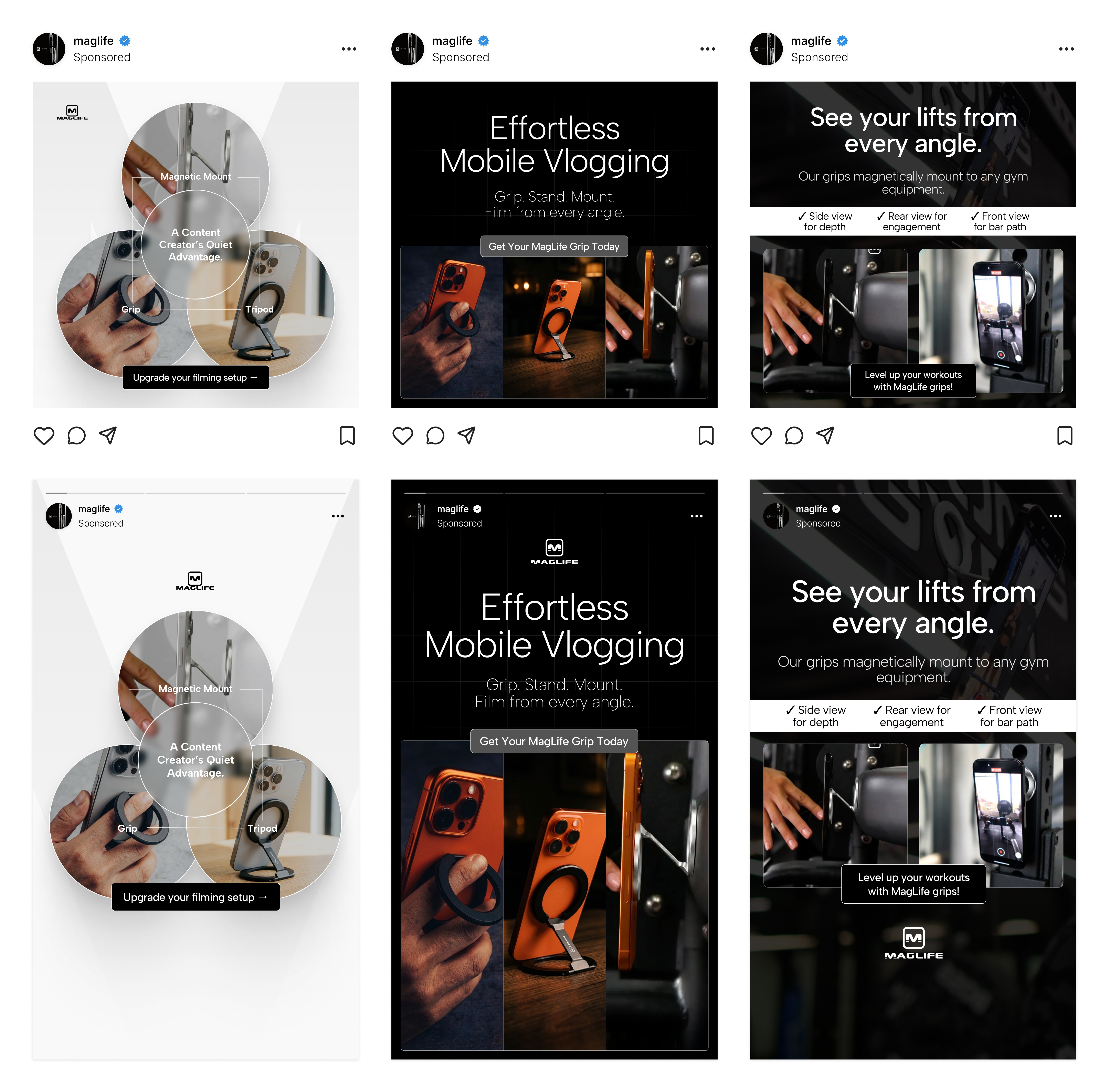
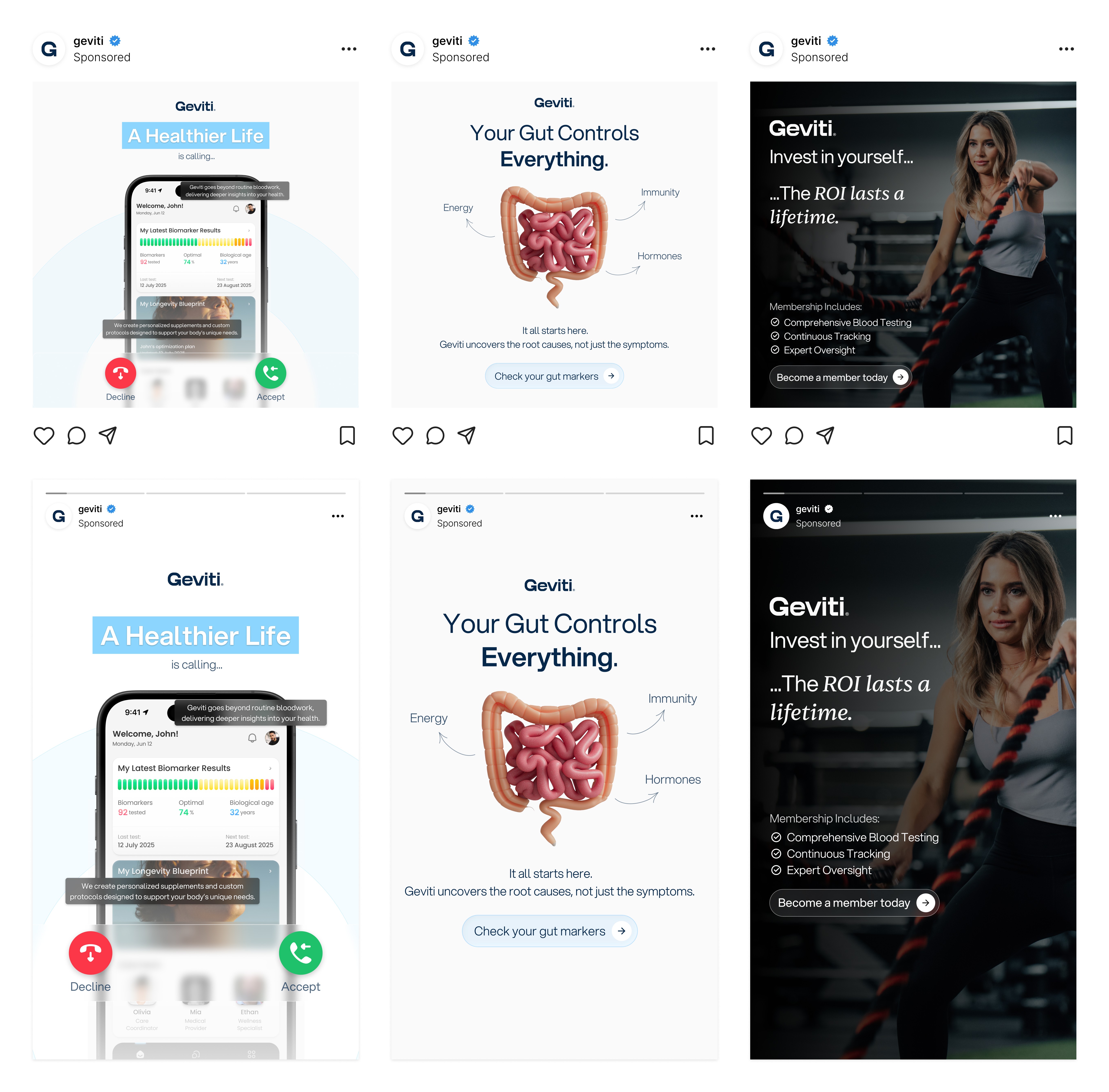
Across five brands (Herbar, Madbury Road, Paramedic Flash, MagLife, Geviti) and roughly 200+ shipped creatives, the sustained range is 3.7x to 6x ROAS, with 9x as the peak.
Different brands, different audiences, different platforms, same core approach. Stop the scroll, earn the curiosity, give one clear next step.
How AI fits into the workflow
I started using AI tools well before they became the default in design conversations. Not because they're trendy, but because they give me back the hours I'd rather spend on the parts of a creative that don't scale, the thinking, the direction, the small calls.
The workflow is pretty consistent at this point:
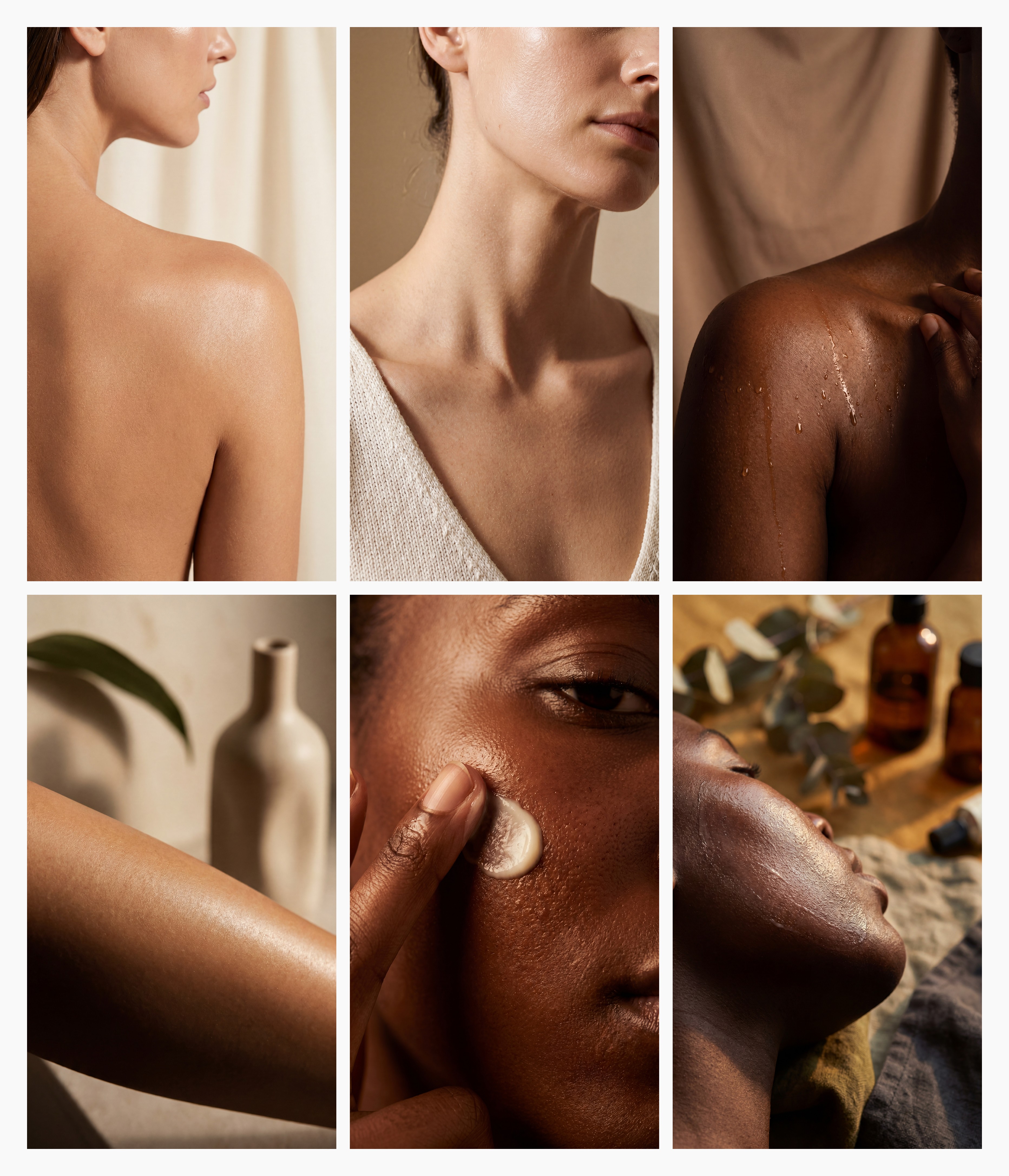
Midjourney for sref and moodboarding. When a brief doesn't come with a clear aesthetic, or when I want to build one from scratch, I start in Midjourney. The style reference workflow (sref) is where the visual direction actually gets locked. I'll generate a batch, pull the sref codes from the ones that feel right, and use them to build a coherent moodboard the rest of the project can pull from.
Claude for prompts. Once the moodboard is set, I move to Claude (usually the newest Opus model at the time) to write the prompts I'll feed into the next stage. The right prompt for Nano Banana isn't the same as the right prompt for Midjourney, and the difference between a good prompt and a great one is usually 4x in the quality of the output. Claude is the part of the workflow that's least visible but most important.
Nano Banana Pro for product imagery and final generation. This is where the actual assets get made. Product shots, lifestyle renders, hero imagery. With the moodboard locked and the prompts dialed in, it goes fast.
Higgsfield for the kind of work Nano Banana can't do. Specific aesthetic directions, motion-adjacent stills, the rare project that needs a tool I haven't found another way to replicate.
Paper for shader work. When a static needs a finishing texture (dithering, halftone, that kind of treatment), Paper is what I drop into the workflow late. Small step, big difference in how a creative feels in-feed.
The point of stacking these tools isn't to use AI for the sake of it. It's that each one does one thing better than anything else I've found, and chaining them lets me cover the full distance from "vague brief" to "shipped asset" in a fraction of the time it would have taken three years ago.
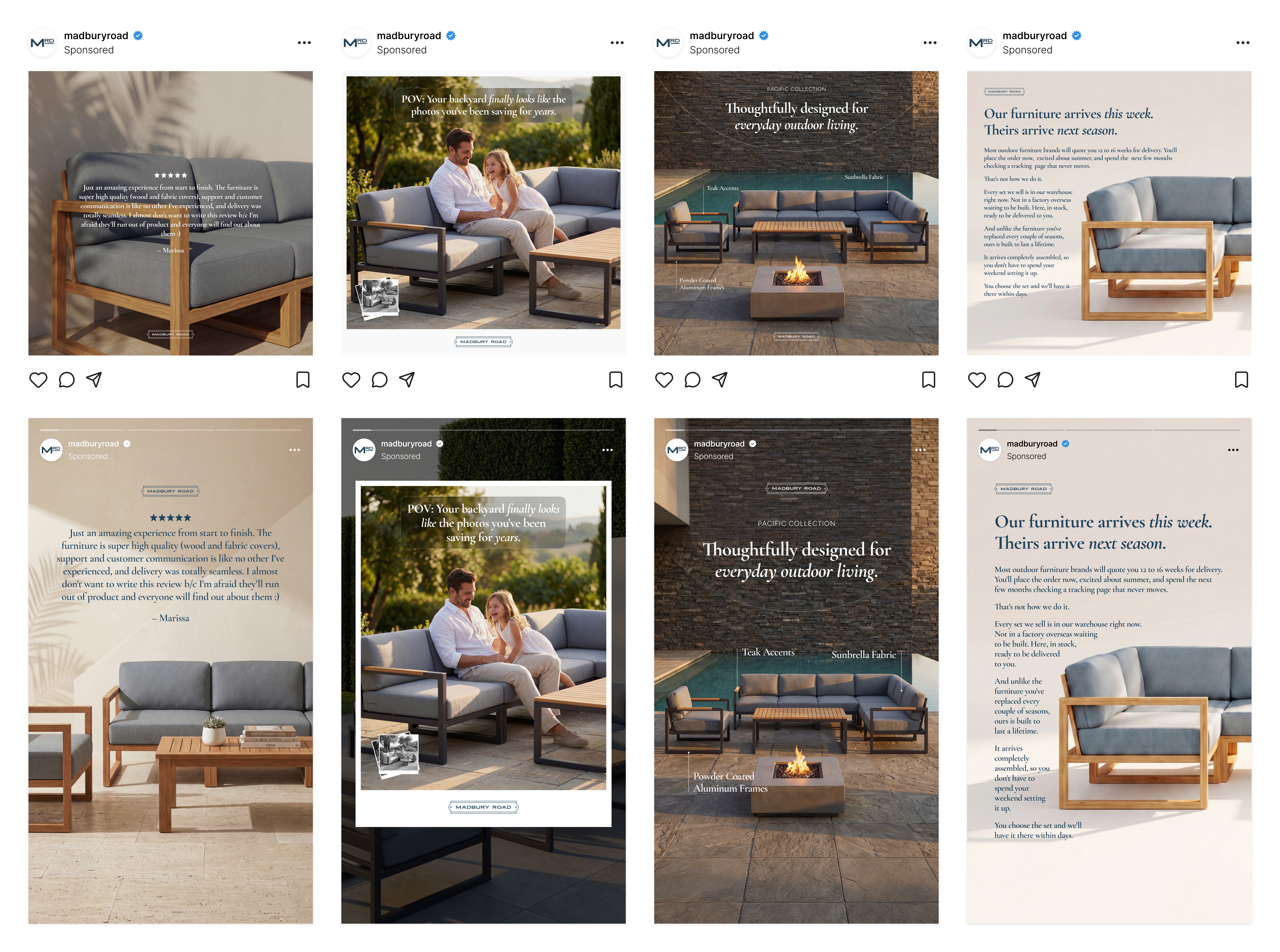
Madbury Road, and the photography suite that wasn't
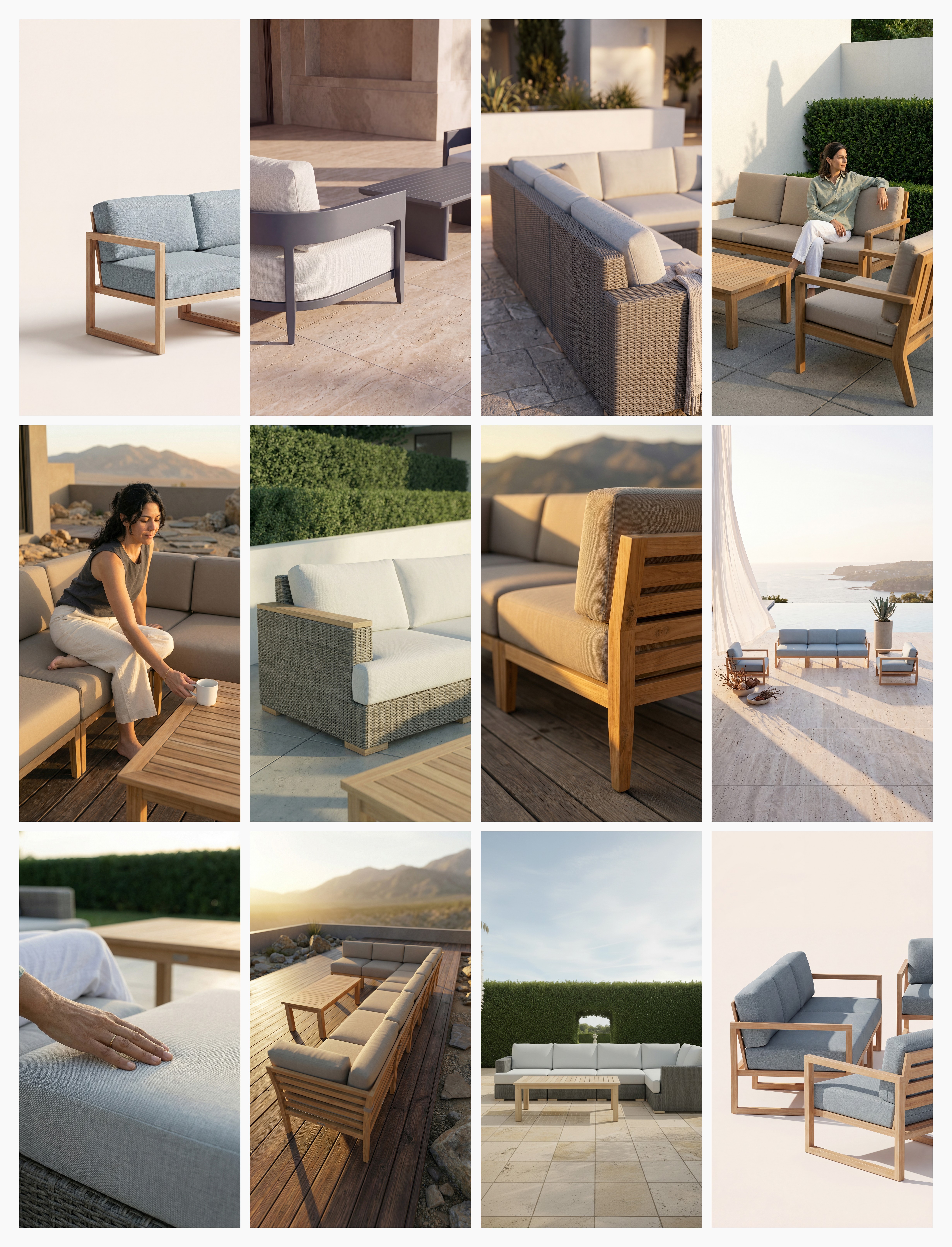
Madbury Road is a luxury outdoor furniture brand. They had decent imagery already, the kind every product brand has after a couple of shoots. The pieces were there, the styling was there, but a lot of the collection's actual potential wasn't being seen. The shots that existed were doing the job, not the work.
The traditional answer would have been to book a shoot. Style the pieces, hire a photographer, find a location, schedule a day. Weeks of lead time. Around $5,000 once everything was tallied.
Instead, I built the entire photography suite in a couple of hours.
Started with clean white background shots. Studio-quality, crisp, letting each piece speak for itself. Then used those as the base for lifestyle renders, the kind that put the furniture in a real space instead of floating in product-shot purgatory. The vibe across the suite was minimal, luxurious, aspirational. The kind of imagery that lets the audience picture the piece in their own life instead of forcing them to imagine around it.
The work I was most proud of was the detail shots. Close-ups of the cushion fabric. The grain of the teak. The small craftsmanship moments that justify a price tag without ever having to mention one. The shots that make someone stop mid-scroll and think wait, that's actually beautiful.
The full suite is now running across the brand's creative, ads, and site.
The gap between "we want better imagery" and "we have incredible imagery" used to be measured in weeks and thousands of dollars. It's getting smaller every day. That's not a complaint about photographers, who I think are going to be more important than ever for the work AI genuinely can't touch. It's a comment on what the rest of us can now do in the meantime.
What this looks like on the ground
Working this way means concept turnaround time on a static drops by roughly 40%, and my actual creative output per sprint roughly triples, both numbers I've tracked across multiple campaigns. The quality bar didn't drop to get there. The opposite, actually. Because the tooling handles the parts that used to eat the hours, I get more time on the parts that matter, the brief, the hook, the composition, the call.
This case study itself is the smallest version of that. I shipped 200+ creatives across five brands while writing it.





You've scrolled down this far, like my work?
Made by Aabis
Share Feedback