
Team Management
Type:
Workforce Planning
Duration:
2 Months • May.25 - Jul.25
Due to NDA restrictions, I’m unable to go very in depth on this project. Below is a brief overview. For more detailed information, feel free to contact me directly.
Problem
The organization had no dedicated system for managing a large, distributed workforce. Team and technician management was handled entirely through disconnected Excel sheets, which led to:
Fragmented and hard-to-maintain workforce data
No clear view of who was assigned where, when, or to which building
Limited control and visibility for managers
High cognitive load when updating schedules, shifts, or assignments
Increased errors as the workforce scaled across multiple buildings and locations
As the number of technicians and sites grew, these spreadsheet-based workflows became increasingly confusing, brittle, and time-consuming. Managers lacked real-time oversight, and even small changes required manual coordination across multiple files.
The product needed to be designed from scratch, with no existing internal tools or clear reference systems in place.
Solution
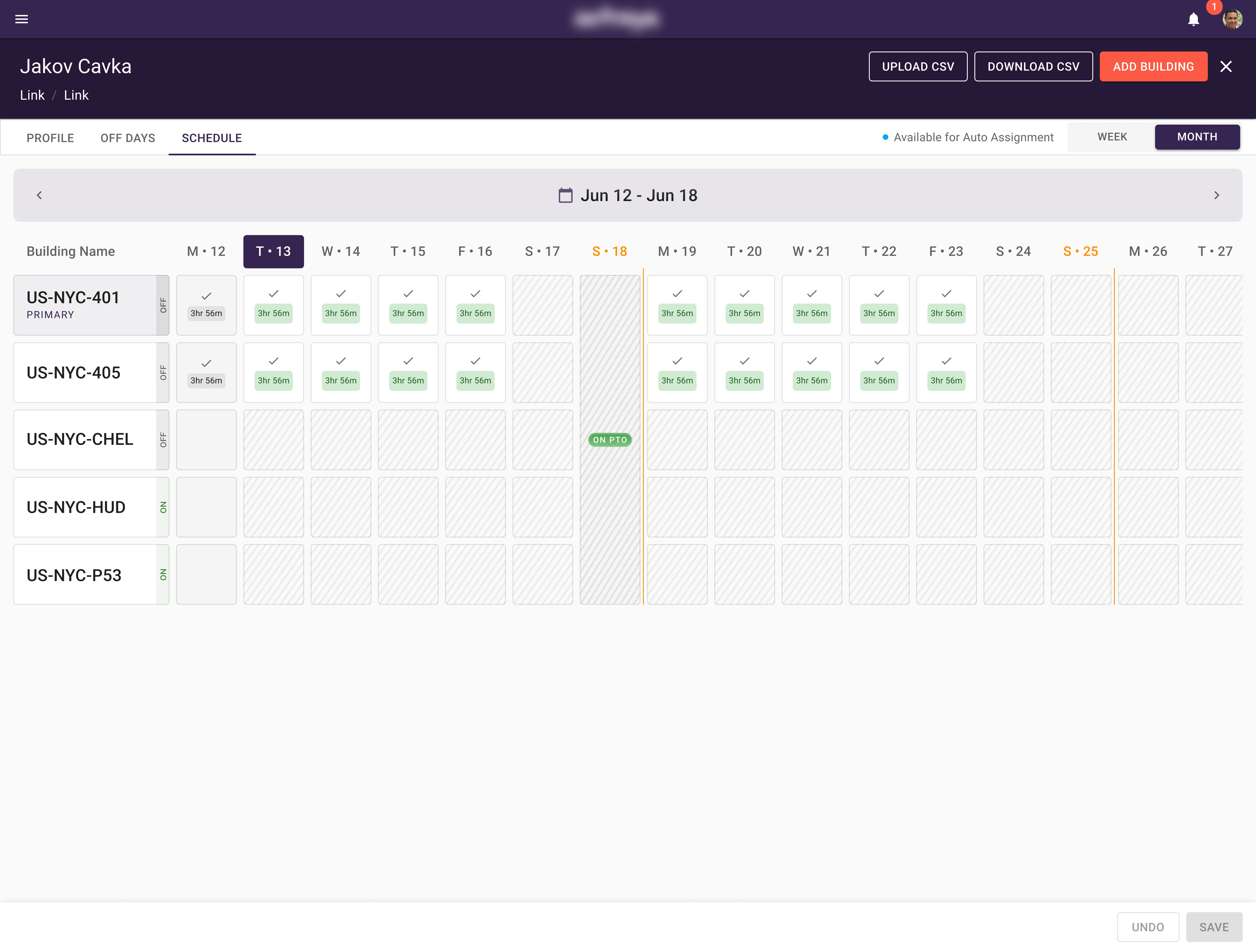
I designed a UX-first team management platform centered around clarity, time-based visualization, and fast scheduling actions.
The core concept was inspired by familiar calendar mental models—similar to Google Calendar—so managers could reason about people, time, and locations intuitively.
Key UX decisions included:
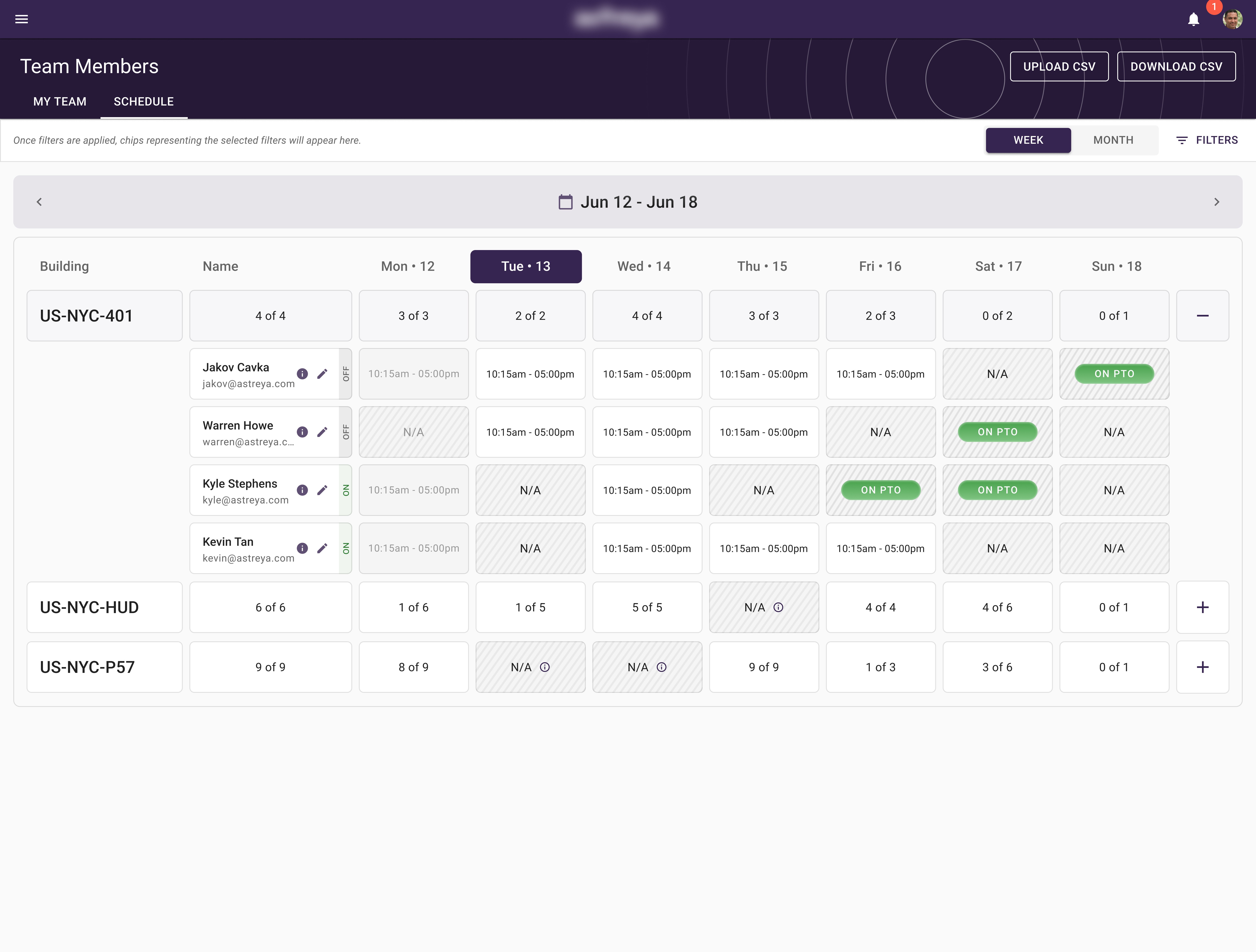
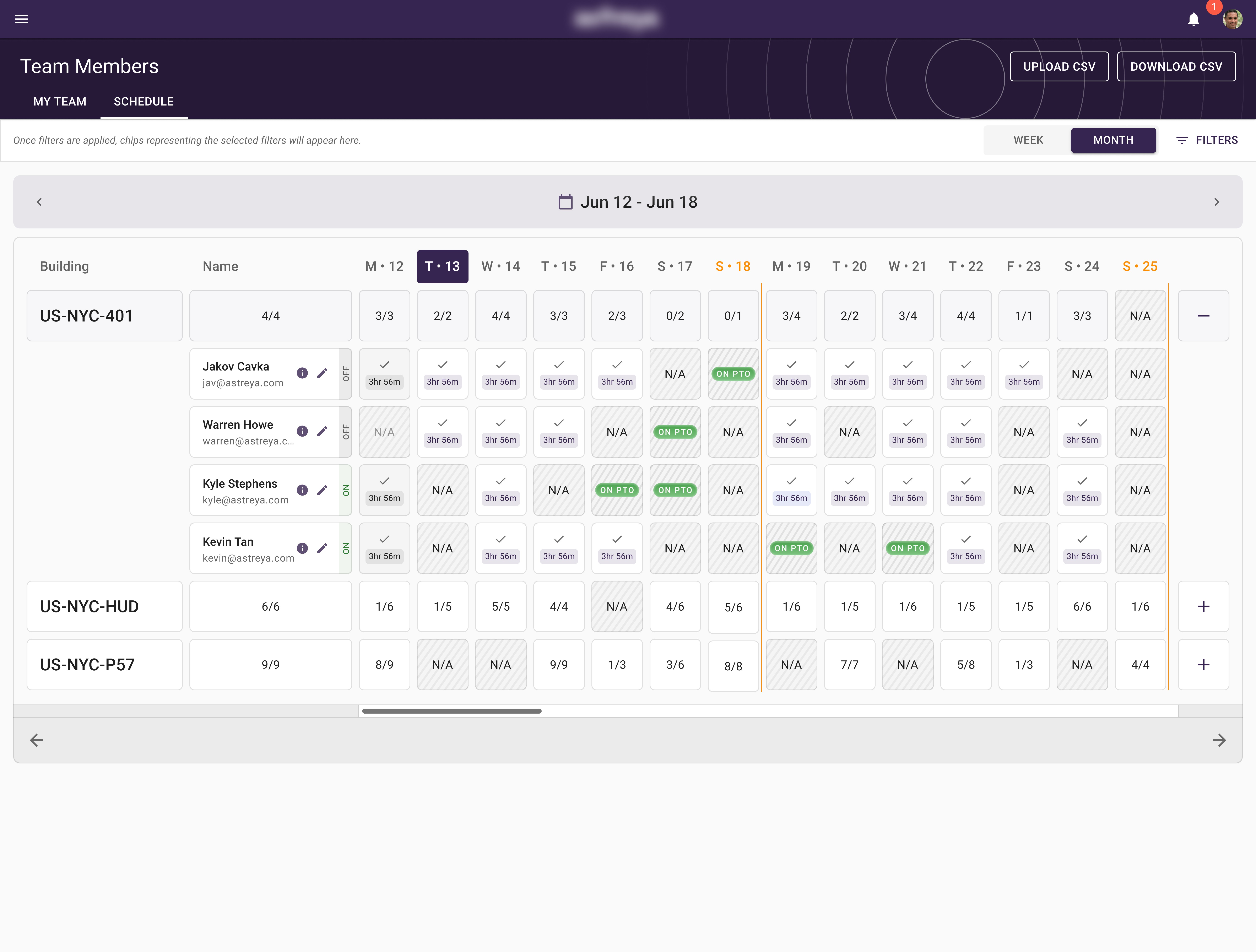
A calendar-based grid layout to represent technicians across weekly and monthly views
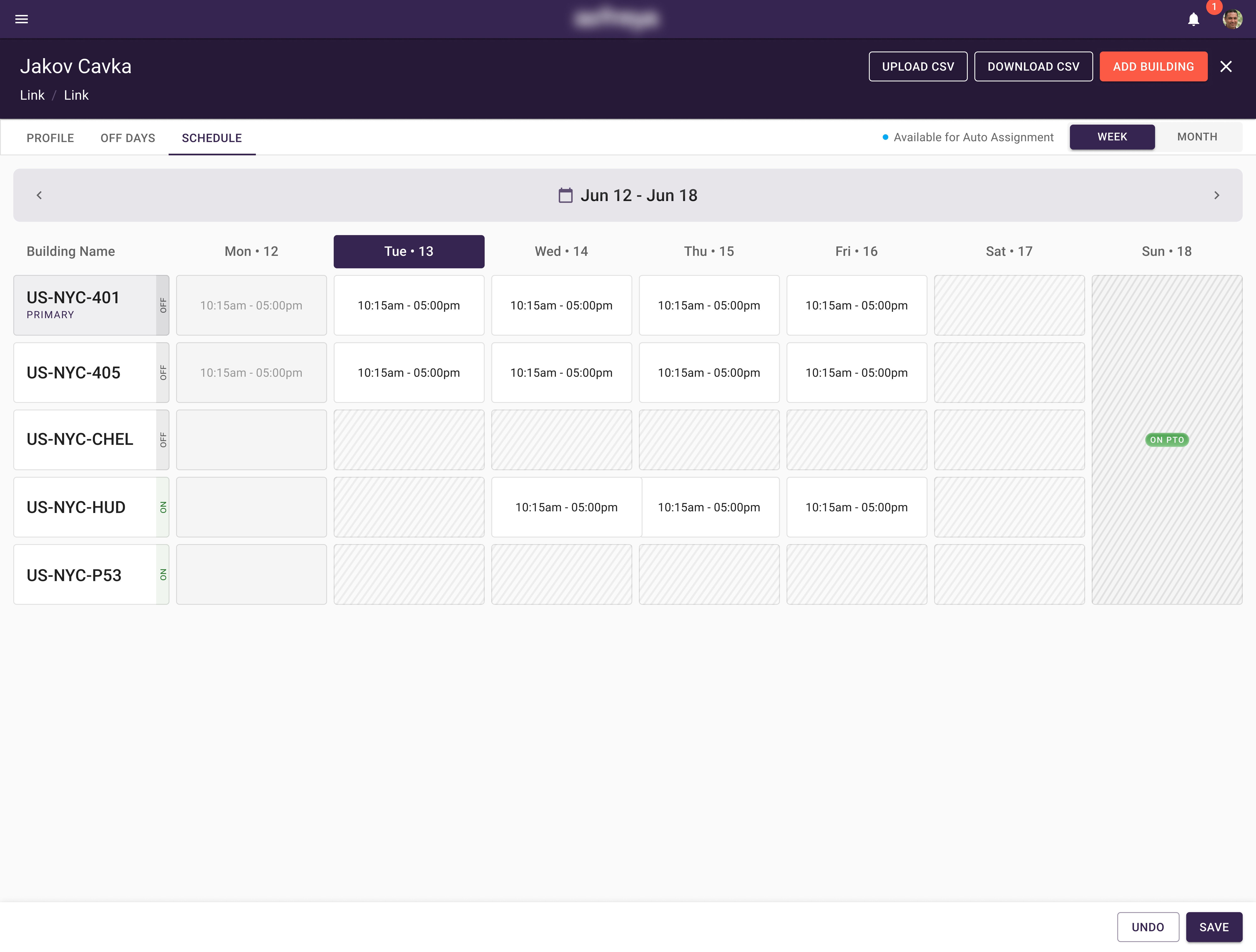
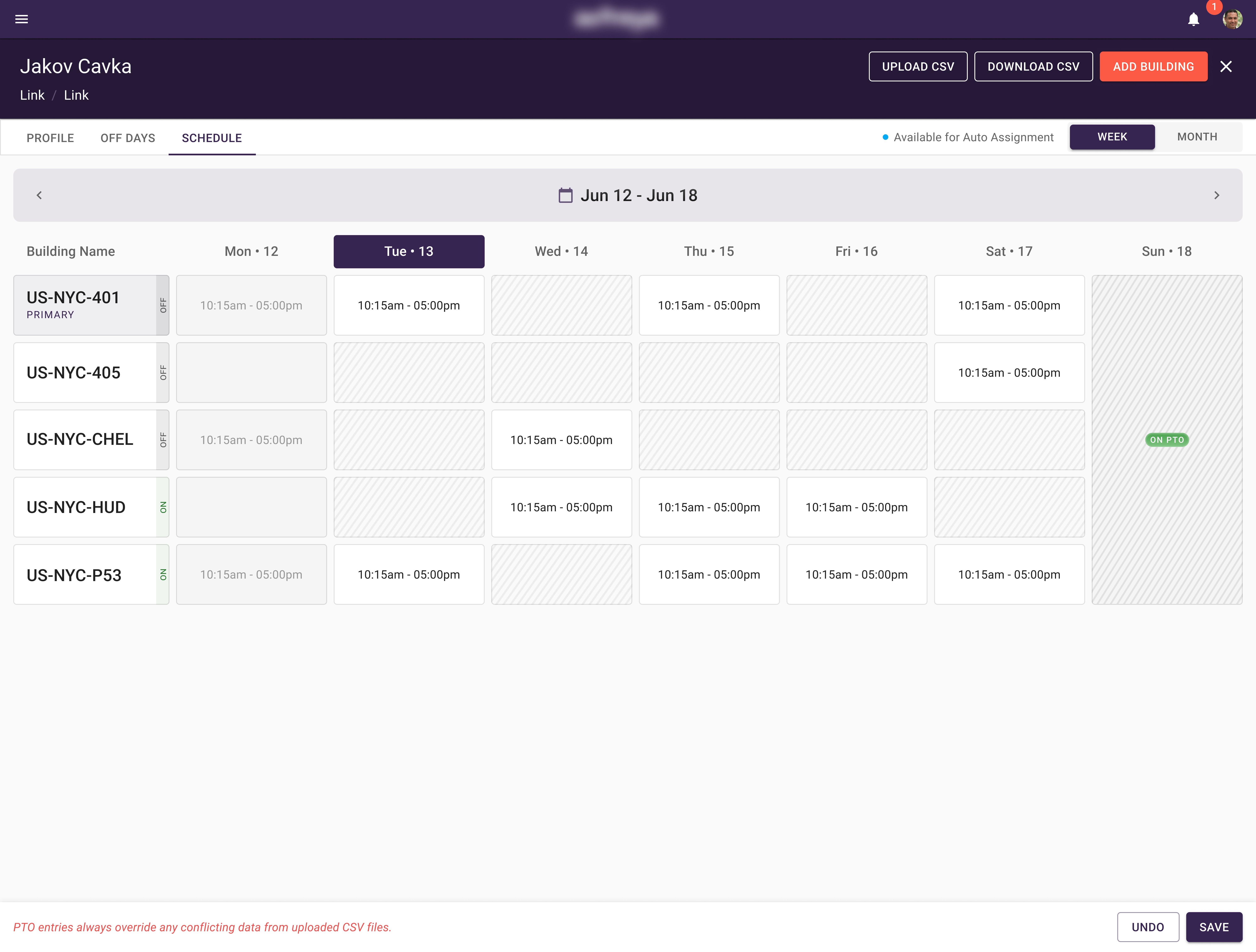
Clear visibility into who is assigned to which building, at what time, and for which job
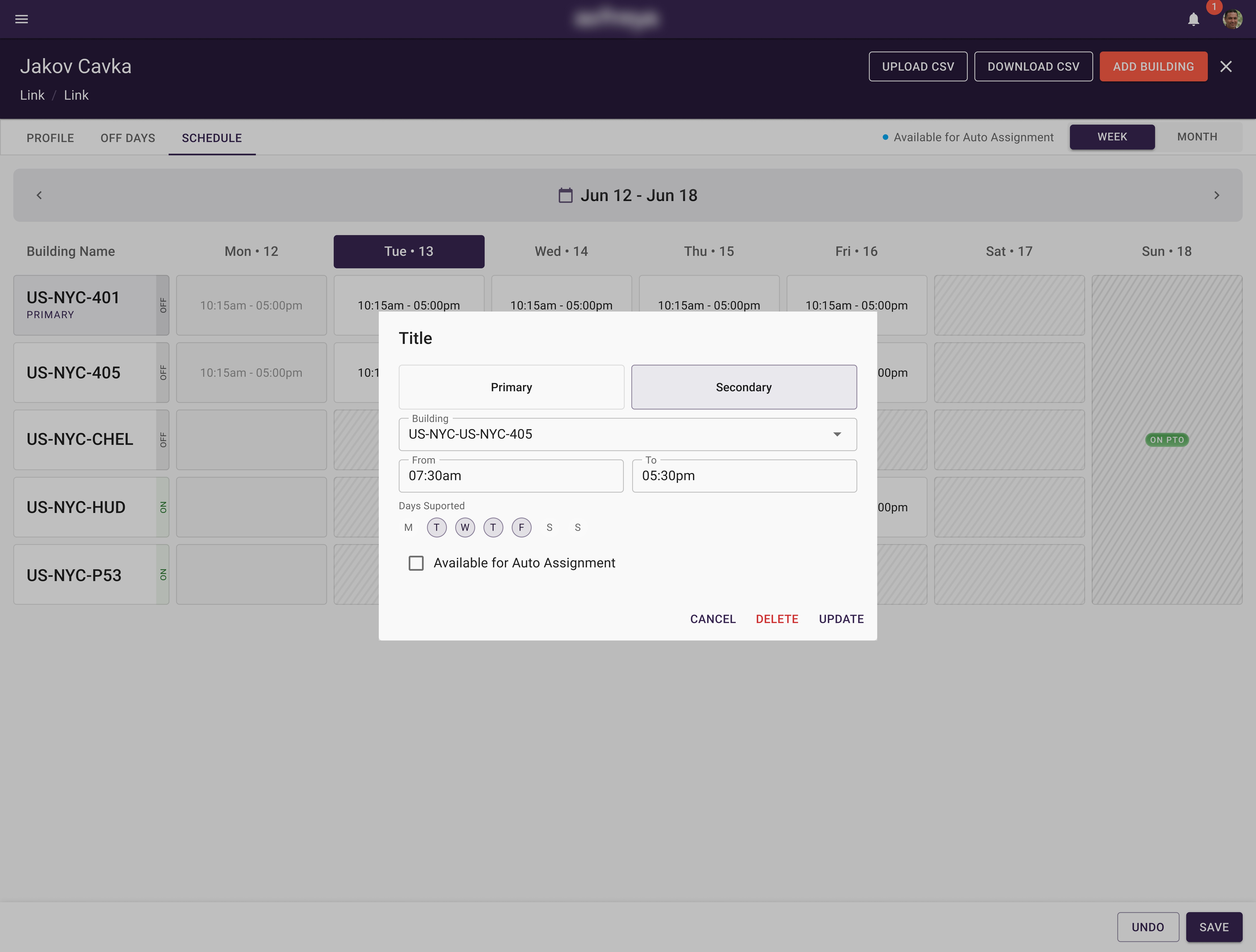
Hover-based interactions on calendar cells to quickly add, edit, or remove shifts without leaving context
Drag-and-drop and inline actions to reduce friction when reassigning work
Manager-level controls to override, adjust, or rebalance schedules in real time
Progressive disclosure of details (job info, location, timing) to keep the interface clean while supporting complex scenarios
The system was designed to scale with large teams and multiple buildings, while remaining fast to scan, easy to update, and predictable to use.
Outcome
The final product replaced spreadsheet-driven workflows with a centralized workforce management system.
It gave managers real control over scheduling and assignments, improved visibility across teams and locations, and significantly reduced the confusion and manual effort involved in day-to-day operations.
By grounding the experience in a familiar calendar metaphor and pairing it with thoughtful interaction design, the platform made managing a large, dynamic workforce clearer, faster, and more reliable.

Made by Aabis
Share Feedback